
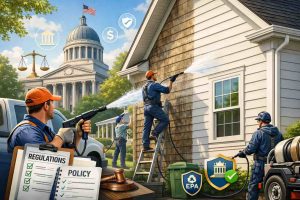
At first glance, house washing seems like a straightforward maintenance task, spray away dirt, remove mildew, restore curb appeal. But when government and politics are injected to this task, exterior cleaning becomes a small-scale reflection of public policy in action. Just as governments maintain infrastructure, enforce standards, and protect shared spaces, homeowners engage in house washing to preserve structural integrity and uphold community appearance.
From zoning codes to environmental compliance, exterior upkeep mirrors broader themes of governance, regulation, accountability, and public perception.
Maintenance as Preventive Policy
Governments invest heavily in preventive maintenance. Roads are resurfaced before potholes become hazardous. Bridges are inspected to prevent collapse. Public buildings undergo regular upkeep to avoid costly reconstruction.
Over time, homes accumulate mold, algae, pollen, pollution residue, and grime. Left untreated, these elements can damage siding, weaken paint, and contribute to moisture intrusion. Routine exterior cleaning functions like infrastructure maintenance as it extends the life of materials and reduces long-term repair costs.
In public policy, preventive measures are often less visible than emergency interventions, yet they are far more cost-effective. Similarly, consistent house washing may go unnoticed when done properly, but its absence becomes obvious when deterioration sets in.
Zoning Codes and Community Standards
Local governments use zoning laws and property maintenance codes to preserve neighborhood cohesion.
Regulations may dictate acceptable exterior conditions, limit visible deterioration, and require property owners to prevent blight. These standards protect property values and ensure visual harmony within communities.
House washing intersects directly with these policies. In many municipalities, excessive mold, peeling paint, or visible neglect can result in citations or fines. Neighborhood associations may also establish maintenance expectations that include clean siding and roofs. Exterior cleaning, therefore, becomes part of regulatory compliance.
This relationship highlights how private property operates within public frameworks. Just as governments balance individual freedoms with community welfare, homeowners must consider how their property’s appearance contributes to or detracts from the neighborhood’s overall image.
Environmental oversight and Responsible Cleaning
Governance extends beyond appearance to environmental protection. Regulations at local, state, and federal levels govern water usage, chemical discharge, and stormwater runoff. Agencies such as the Environmental Protection Agency establish guidelines to minimize pollution and protect waterways.
Professional house washing services must navigate these rules carefully. Pressure washing can generate significant runoff containing detergents, dirt, and organic contaminants. Without proper containment or eco-friendly cleaning agents, this runoff may enter storm drains and flow into rivers or lakes.
As a result, responsible contractors adopt environmentally compliant practices such as:
- Using biodegradable solutions
- Controlling water pressure to prevent damage
- Redirecting runoff away from public systems
Some jurisdictions even require permits or adherence to water reclamation standards.
Public Image and Political Symbolism
In politics, public image matters. Governments invest in landscaping, monument preservation, and building maintenance because visible neglect can signal instability or indifference. A clean, orderly civic environment fosters confidence and pride.
Homes function similarly at a micro level. A well-maintained exterior signals responsibility and care. In contrast, visible grime or decay can affect perceptions of safety, stability, and neighborhood vitality.
This dynamic underscores how aesthetics intersect with policy. Just as city councils debate funding for beautification projects, homeowners decide when to invest in exterior cleaning.